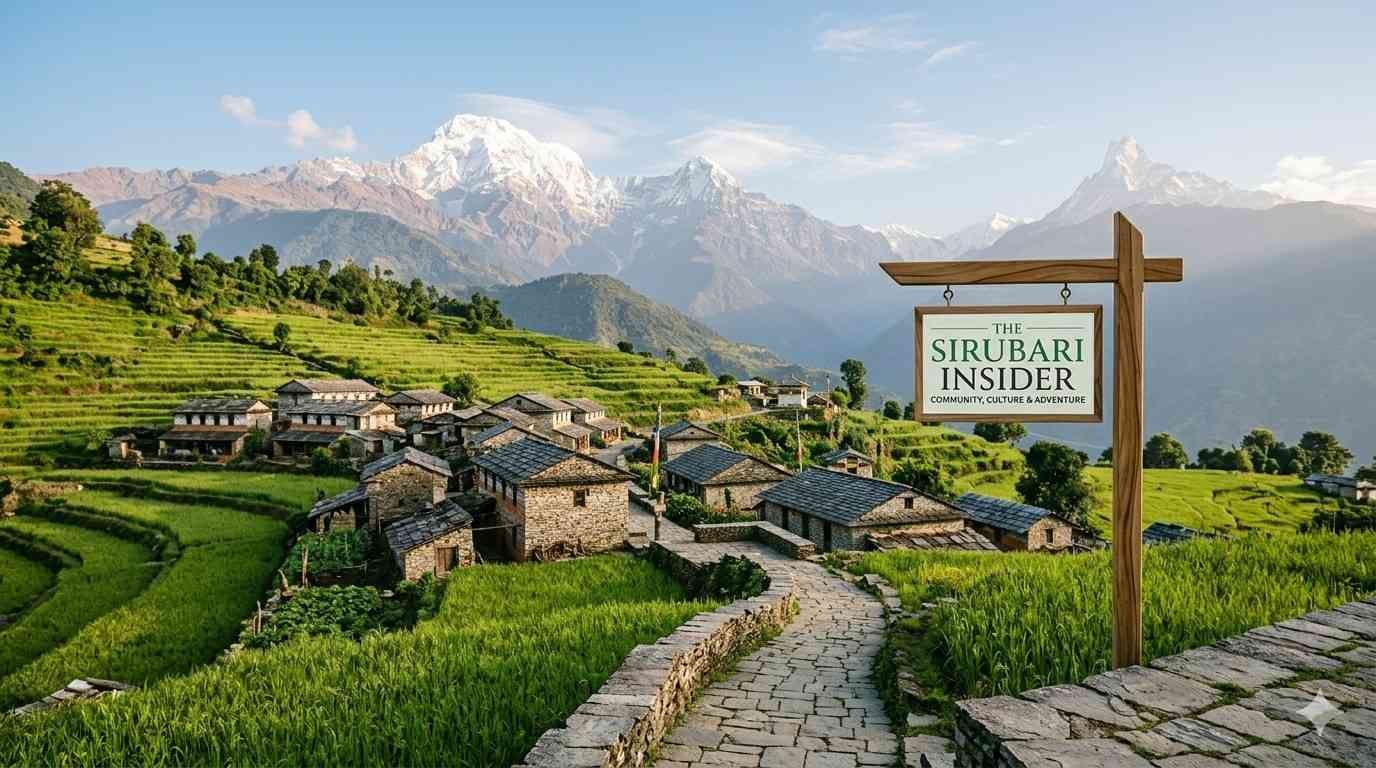
About Sirubari Village
How a remote settlement in Syangja revolutionized community-based tourism across Asia.
The Birth of a Pioneer Model
In the late 1990s, Sirubari envisioned a sustainable alternative to mainstream, commercialized tourism. Under the visionary leadership of local pioneers and supported by Capt. Rudra Bahadur Gurung, the village opened its doors to global travelers in 1997.
The concept was simple yet revolutionary: instead of building hotels, the community upgraded their existing homes to host travelers. This preserved the local architecture, kept the revenue strictly within the village economy, and protected the delicate cultural fabric of the Gurung community.
Gurung Heritage & Community Living
The soul of Sirubari lies in its people. The Gurung community here maintains a deep connection to their ancestral traditions, martial history, and spiritual practices.
Sustainable Community Elements:
The Village Tourism Committee: A local governing body that ensures uniform hospitality standards, sets fair pricing, and coordinates guest allocations.
Organic Agriculture: Food served at Sirubari is locally grown, utilizing traditional farming techniques free from industrial pesticides.
Cultural Preservation: Daily evening gatherings at the community hall showcase traditional music, instruments, and costumes that have been passed down through generations.
Beyond the Homestay
Thumro Juro
The highest geographic point in the area, Thumro Juro, stands as a spiritual watchtower over the village. It features a manicured viewpoint and a local shrine, providing an uninterrupted 360-degree vista of the Himalayas.
The Village Monasteries and Temples
Explore the local Buddhist Gumbas and Hindu shrines that sit side-by-side, showcasing the harmonious religious co-existence unique to the mid-hills of Nepal.
Preserving Our Future
As digital connectivity evolves, Sirubari.com serves as the definitive open-access portal to ensure the village’s story is told authentically. We aim to bridge the gap between independent global travelers, premium eco-conscious travel agencies, and the local conservation committee.